


You find yourself glued to your screen, the hours slipping by without you even realizing it. Your eyes start to burn, a nagging discomfort that pulls you from whatever you were focusing on.
They feel heavy, almost like weights are sitting on your eyelids and when you glance away, everything seems slightly blurry, as if you’re viewing the world through a foggy lens.
You blink more forcefully, rub your eyes in a desperate attempt for relief but that familiar discomfort creeps back in, relentless and demanding your attention.
If you happen to be over 35, you might brush it off as just another case of “too much screen time.” But what if I told you it’s often much more complicated than that? It could be a mix of changes in surface lubrication, muscle fatigue, inflammation and metabolic stress, your eyes working overtime and waving a little flag of distress.
Getting to know the difference between dry eyes and eye fatigue is crucial. It’s like uncovering a little mystery! When you can pinpoint the real culprit behind your discomfort, you can take steps to tackle the root problem instead of wandering in circles, hoping something will help.
Ready to discover more? Let’s dive into what’s really going on and explore some solutions that could bring your eyes back to life!
Dry Eye vs. Eye Fatigue: They’re Not the Same.
These two conditions often overlap, but they stem from different mechanisms.
Dry Eye: A Lubrication & Tear Film Problem
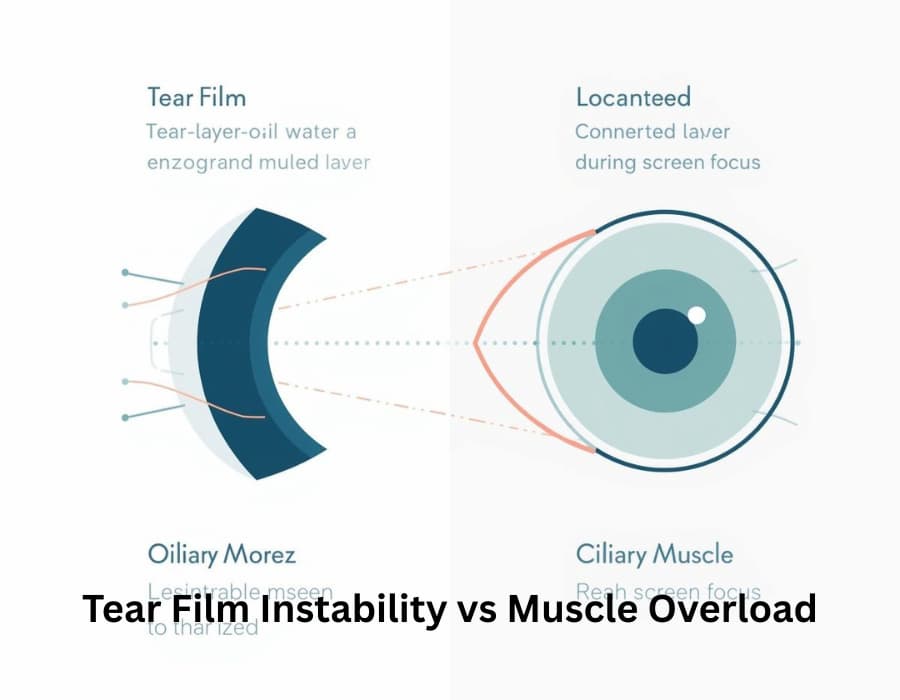
Dry eye occurs when your tear film, the thin protective layer covering the eye, becomes unstable.
This can happen because:
- Oil glands (Meibomian glands) produce less protective oil
- Tears evaporate too quickly
- Inflammation disrupts tear quality
- Hormonal shifts alter lubrication
Common symptoms include:
- Burning or stinging
- Gritty or sandy sensation
- Redness
- Watery eyes (a reflex response)
- Sensitivity to wind or air conditioning
It often worsens in dry environments.
Eye Fatigue: A Muscle & Focus Overload Problem
Eye fatigue (digital eye strain) is different.
It’s primarily caused by prolonged near focus work.
When you look at screens for hours, the tiny ciliary muscles responsible for focusing remain contracted.
Over time, this leads to:
- Heavy eyelids
- Dull headaches
- Pressure behind the eyes
- Blurry vision after screen use
- Difficulty shifting focus from near to far
It improves with rest not necessarily with eye drops.
Why Symptoms Increase After 35
This is where most articles stop.
But midlife changes matter.
After 35–40, several physiological shifts make eye discomfort more common:
1. Hormonal Changes Affect Tear Stability
Did you know that our bodies have special helpers called hormones? They can change a lot of things, even in our eyes! When women get older, especially during a time called perimenopause and menopause, the levels of hormones like estrogen and androgen can go up and down a lot.
These hormones help our eyes make a magic layer called tears that keeps them nice and comfy. But when the hormones are not balanced, the tear film can get a bit wobbly. This makes the tears evaporate faster, just like how water can disappear on a hot day!
When we don’t have enough tears, our eyes can feel scratchy and dry. That’s why many women start to notice dry eyes more often during this time in their lives. So, hormones might be little troublemakers when it comes to keeping our eyes happy and healthy!
Now aging can be associated with mild chronic inflammation.
Inflammation affects:
- Tear gland function
- Surface eye tissue integrity
- Microvascular circulation
Even a subtle inflammatory load can worsen dryness and irritation.
3. Blood Sugar & Microcirculation Matter
What we eat can significantly impact our eye health. Just like a car runs better with the right fuel, our bodies function better when we eat nutritious foods that keep our blood sugar levels stable, such as fruits, vegetables and whole grains.It’s interesting to think about how supplements can really enhance our nutrition intake. Personally, I’ve found that Theyavue and iGenics supplements are great options. They help fill in any gaps in my diet and support my overall health.
When our blood sugar spikes and drops frequently, it can affect the tiny blood vessels in our bodies, including those in our eyes, making it harder for them to function properly. This can prevent our eyes from healing well and feeling comfortable.
On the flip side, by maintaining steady blood sugar levels through healthy eating we can help support our eye health and overall well-being. It’s a simple yet powerful way to take care of one of our most important assets, our eyesight.
4. Screen Exposure Has Intensified
Today’s adults over 35 are:
- Working longer hours on digital devices
- Using phones at night
- Rarely blinking during focused screen work
Blink rate drops significantly during screen use, which worsens tear evaporation.
Muscle fatigue and lubrication instability begin to overlap.
Let’s Talk About Why This Matters for Performance
Eye discomfort is more than irritation.
It affects:
- Focus stamina
- Reading endurance
- Productivity
- Cognitive clarity
- Work output
If your eyes fatigue quickly, your performance declines.
For adults navigating midlife metabolic shifts, this compounds existing energy changes.
Supporting eye comfort is supporting performance capacity.
What Really Makes a Difference (A Thoughtful Strategy)
Instead of chasing random solutions, address both surface and systemic contributors.
Step 1: Reduce Mechanical Strain
Follow the 20-20-20 rule:
Every 20 minutes, look 20 feet away for 20 seconds.
Here’s what you can also do:
Adjust the screen height slightly below eye level
Increase font size
Use artificial tears (preservative-free) if dryness is present
Consciously blink during screen use
Mechanical load must be reduced first.
Step 2: Stabilize Inflammation & Tear Support
If dryness is persistent, consider:
- Increasing omega-3 intake (fatty fish or supplementation)
- Supporting overall anti-inflammatory nutrition
- Hydrating adequately
- Reducing ultra-processed foods
Omega-3 fatty acids help improve tear film quality and reduce ocular surface inflammation.
Quality matters:
Look for well-sourced, third-party tested formulations.
Step 3: Support Metabolic Stability
Blood sugar swings amplify inflammatory load and tissue stress.
Here’s what you can do to stabilize:
- Eat protein with every meal
- Avoid long stretches of fasting if you’re already fatigued
- Pair carbohydrates with fiber and fat
- Prioritize sleep
Metabolic stability improves tissue resilience, including ocular tissue.
Step 4: Address Stress Load
Chronic stress increases cortisol, which can:
- Disrupt sleep
- Increase inflammation
- Worsen tissue repair
If symptoms feel stress dominant (tightness, pressure, fatigue), adaptogenic herbs such as ashwagandha or rhodiola may support stress resilience.
However, these are stress modulating tools not quick fixes.
They should be evaluated over several weeks, not days.
When Eye Drops or Capsules Alone Aren’t Enough
Artificial tears help temporarily.
But if dryness is driven by:
- Hormonal shifts
- Inflammation
- Meibomian gland dysfunction
- Metabolic stress
Surface lubrication alone won’t solve it.
It’s often more effective in the long run to blend changes in lifestyle with improvements to our environment or structure.
Who This Is Not For
This article does not apply if you experience:
- Sudden vision loss
- Severe eye pain
- Light flashes or floating shadows
- Double vision
- Persistent thick discharge
- Rapidly worsening symptoms
These require immediate evaluation by an optometrist or ophthalmologist.
Chronic eye discomfort related to screens, midlife changes or inflammation should still be professionally assessed if persistent.
Here’s The Bigger Picture
Dry eyes and eye fatigue are often framed as minor annoyances.
But after 35, they frequently reflect broader shifts in:
- Hormone signaling
- Inflammatory load
- Blood sugar regulation
- Screen-related muscle strain
Your eyes are not letting you down; they’re actually trying to tell you something important, they’re feeling the stress. When you take steps to lighten the load on your body and boost your overall health, you’ll likely notice a gradual and lasting improvement in your comfort.
As you navigate midlife, it’s not just about having enough energy or managing your weight. It’s also about keeping your mind clear and your body in tune and this includes taking care of your eyes.